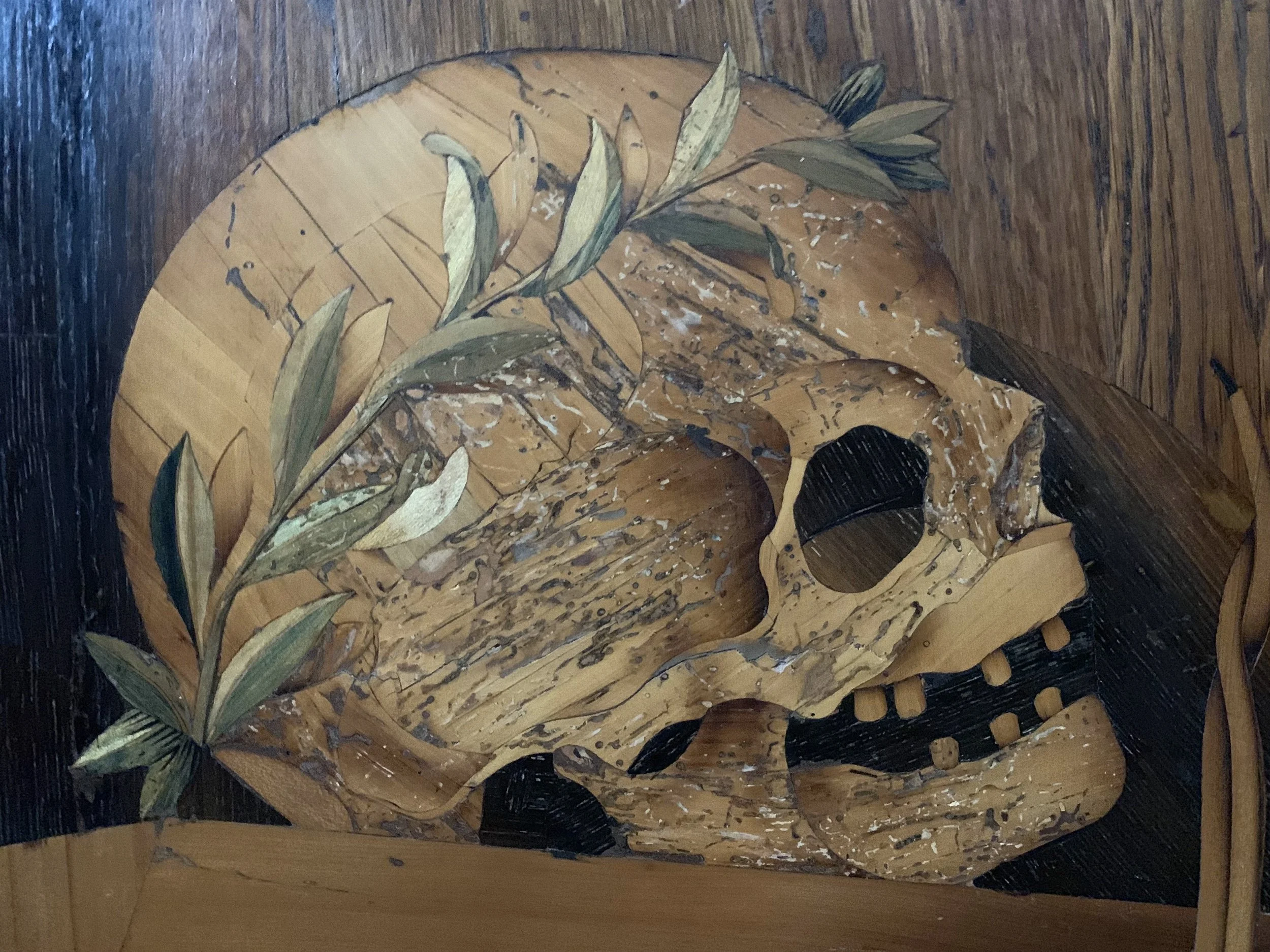
In an intarsia panel in Lombardy (c. 1520), a skull rests on a cupboard shelf, its crown festooned with laurel leaves. The portion of the skull behind the eye – the temporis os or “bone of time” – is mottled with wormholes and pockmarks, underscoring the symbolic import of the momento mori, a reminder of the fragility of life and the fate of human flesh. On the wall behind are pronounced vertical grains, each one a tree ring that corresponds to a human and arboreal year. And around the crown of the skull, wood infected with a green-staining fungus has been used to depict laurel leaves; fungal stains are far more permanent than artificial pastes or pigments, appropriate for a laurel leaf, symbol of eternal youth and beauty. The panel breathes with an arboreal intelligence, asserting correspondences between the growth and decay of trees and the weighty questions of human life, death and rebirth that were pondered in the choir precincts, sacristies and private rooms where intarsia panels were installed.
My book argues that intarsia makers’ inventive engagements with wood provoked new ways of thinking about the human relationship to forests, trees and plant life. From the mid-fifteenth to early-sixteenth centuries, intarsia panels formed the backdrop for spiritual practice and everyday life, and intarsia makers were key participants in networks of architects, sculptors, and painters. Presenting new visual and material evidence, much of it gathered outside of Italy’s traditional artistic centers, I show how the knowledge and expertise developed by intarsia makers spurred innovations in other art forms, especially painting, encouraging early modern Italians to think about human life, death and rebirth in distinctly arboreal terms.